What makes a town feel like home before you even step inside a house? In Franklin, the answer often starts at the street. Brick sidewalks, historic facades, front porches, patios, and a full weekend calendar create a place that feels designed for lingering. If you are drawn to homes with character and a lifestyle that feels as thoughtful as the architecture, this guide will show you how Franklin lives over the course of a weekend. Let’s dive in.
Why Franklin Appeals to Design Lovers
Franklin offers something many buyers hope to find but rarely do all in one place: walkability, preserved architecture, and a strong sense of visual continuity. Its downtown core centers on Public Square and Main Street, an area recognized by Visit Franklin as a Great American Main Street and listed on the National Register of Historic Places.
That setting shapes the experience of everyday life. You are not just looking at beautiful buildings. You are moving through blocks where storefronts, porches, sidewalks, and gathering spaces work together to create a cohesive streetscape.
Franklin also feels both connected and distinct. Located about 21 miles south of downtown Nashville, it offers access to the larger region while maintaining its own identity through historic character, local restaurants, music, and civic events.
Start Your Weekend on Main Street
If you want to understand Franklin quickly, start downtown. Visit Franklin describes Main Street as a stretch lined with boutiques, home goods stores, art galleries, and restaurants set inside historic buildings dating back as far as 1799.
For a design-minded buyer, this matters. The experience is not just about shopping or dining. It is about seeing how old buildings have been preserved, adapted, and woven into current daily life.
As you walk, pay attention to the rhythm of the block. Commercial buildings in the downtown historic district often feature brick construction, flat roofs, two- and three-story forms, storefronts at street level, and upper stories that sit flush along the block face. That consistency gives downtown Franklin its grounded, timeless feel.
Add a Tour to See More Detail
A casual stroll gives you one impression. A guided or self-guided tour can help you notice the details that make Franklin feel so distinct.
Visit Franklin points to self-guided tour booklets and digital passports, along with guided experiences such as Franklin on Foot, Franklin Walking Tours, and the Franklin Hop trolley. These options add architectural and historical context that can help you better understand what makes different blocks and buildings memorable.
If you are considering a move, that insight can be useful. It helps you start identifying the streets, scales, and home styles that match the way you want to live.
Notice the Architecture That Shapes Daily Life
One of Franklin’s strongest lifestyle draws is that design is not hidden behind gates or tucked into one development. It is part of the public realm.
The City of Franklin says the Downtown Franklin Historic District includes the city’s oldest residential and commercial buildings, with most structures dating to the 19th and early 20th centuries. Early homes were often built in the Federal style, while later additions and new construction introduced Greek Revival, Italianate, and Victorian influences.
In historic residential areas, the city describes a pattern of one- and two-story homes with brick, stone, or wood exteriors, gabled or hipped roofs, front porches, lawns, trees, and detached accessory structures. Other Franklin historic districts also include Queen Anne, Craftsman, Colonial Revival, Tudor Revival, and Ranch styles.
For you as a buyer, that variety creates options. You may be drawn to a restored historic home, or you may prefer a newer property that fits the surrounding streetscape while offering a more current layout.
Why Porch Culture Matters
Franklin’s design guidelines show that the appeal of the city is not just about preserving old houses. It is also about protecting the feel of the street.
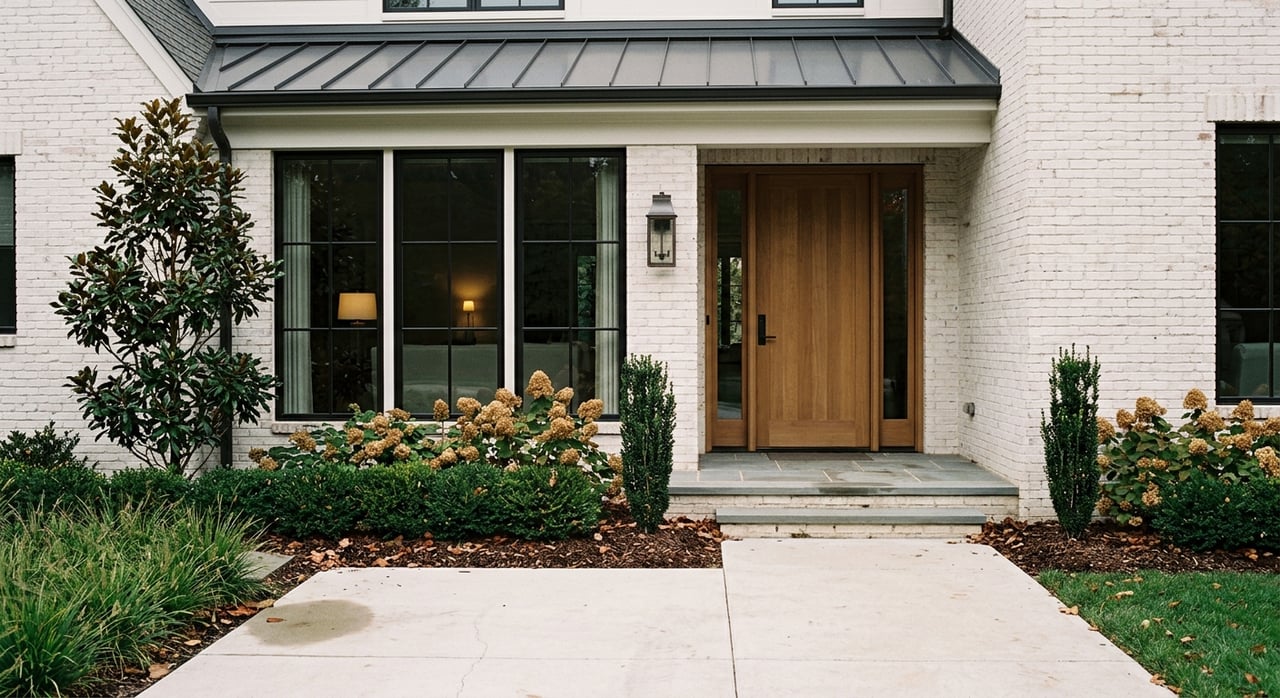
The city expects many elements of new residential construction, including roofs, porches, stoops, windows, and materials, to be compatible with neighboring historic buildings. A front porch or stoop is generally expected on new residential construction, except in limited historically accurate Federal-style cases.
That tells you something important about living here. Franklin values continuity of scale, visual rhythm, and street presence. If you care about curb appeal, pedestrian-friendly blocks, and homes that contribute to a cohesive setting, that design approach can be a major draw.
Plan for Patio Dining and Slow Evenings
A design-forward weekend is not only about architecture. It is also about the spaces where you pause, gather, and stay a little longer.
Franklin’s dining scene leans into patios, porches, and outdoor rooms. Visit Franklin highlights patio seating at 1799 Kitchen & Bar Room and Culaccino, and its patio guide points to porch-and-patio settings at places like JJ’s Wine Bar and Perenn Bakery.
That outdoor dining culture complements the built environment. After a morning walk downtown, it feels natural to settle into a shaded patio, notice the materials and facades around you, and imagine what your own daily routine could look like here.
Visit Franklin also describes the local food scene as spanning upscale Southern cuisine, comfort food, and rooftop cocktails. For buyers, that range signals flexibility. A weekend in Franklin can feel polished and celebratory or easy and relaxed, depending on what you want.
Build Your Weekend Around Arts and Music
Franklin’s visual appeal is only part of the story. The city also offers a strong cultural rhythm that helps the area feel active and lived-in.
The Franklin Theatre, which opened in 1937, now hosts about 500 performances a year, including movies, live music, dance, theater, and community events. That kind of regular programming adds energy to downtown and gives residents an easy way to enjoy a night out without leaving the area.
The Factory at Franklin adds a different kind of creative layer. Built around 1929 from 11 Depression-era factory buildings, it now serves as a destination for shopping, dining, entertainment, artisans, and a farmers market.
Its market lists nearly 100 vendors offering items such as produce, cheeses, herbs, flowers, and crafts. For a design-conscious buyer, spaces like The Factory show how Franklin blends historic preservation with present-day use in a way that feels authentic rather than staged.
See How Events Bring the City Together
One of the best ways to understand a place is to see how people use it together. Franklin’s annual calendar makes that easy.
Visit Franklin highlights recurring events such as Main Street Festival, Franklin Rodeo, PumpkinFest, Pilgrimage Music & Cultural Festival, Franklin Tree Lighting & Christmas Parade, and Dickens of a Christmas. Many of these events happen in or around the walkable downtown core.
That matters because it reinforces a simple truth about Franklin. Its public spaces are not just attractive backdrops. They are active parts of community life throughout the year.
If you are deciding where to live, this can be a meaningful difference. A place with a strong event calendar often feels more connected, more memorable, and easier to enjoy beyond the walls of your home.
What Buyers Should Take From a Weekend Visit
A weekend in Franklin can tell you a lot about whether the city fits your lifestyle. If you find yourself noticing porch lines, facade details, walkable blocks, local shops, and well-used public spaces, that is not incidental. It is part of what makes Franklin so compelling.
This is often a strong match for buyers who care about how a home looks and functions from the street as much as how it feels inside. That could mean a historic property with original character or a context-sensitive infill home that respects the surrounding neighborhood fabric.
For design-conscious buyers, the key is knowing how to evaluate both the home and its setting. Streetscape, scale, materials, and visual flow all shape long-term satisfaction just as much as square footage or finishes.
Why a Design-Led Real Estate Lens Helps
When you are searching in a place like Franklin, design is not a side note. It is part of the value story.
That is why it helps to work with someone who can look beyond surface-level appeal and help you assess presentation, layout potential, architectural fit, and the details that influence how a home lives day to day. In a market where character and context matter, that perspective can bring clarity.
At The Luxury Blueprint, that means combining real estate guidance with a design-aware point of view. Whether you are relocating, moving up, or looking for a home with a more refined visual story, the goal is to help you find a property that fits both your lifestyle and your eye.
If Franklin’s mix of architecture, walkability, patios, and cultural energy feels like your kind of weekend, it may also be your kind of home base. When you are ready to explore the Franklin market with a thoughtful, design-forward strategy, schedule a free consultation with Shonte’ Walton.
FAQs
What makes Franklin, Tennessee appealing to design-conscious homebuyers?
- Franklin appeals to design-conscious buyers because it combines walkable historic streets, preserved architecture, front-porch-oriented residential areas, patio dining, live performance venues, and year-round events in a cohesive setting.
What architectural styles can you find in Franklin, Tennessee?
- According to the City of Franklin, buyers can find Federal, Greek Revival, Italianate, Victorian, Queen Anne, Craftsman, Colonial Revival, Tudor Revival, and Ranch influences in different historic areas.
What should you do on a weekend visit to Franklin before buying a home?
- A smart weekend visit can include walking Main Street, exploring Public Square, taking a guided or self-guided tour, dining on a patio, visiting The Franklin Theatre or The Factory at Franklin, and paying attention to the streetscapes that feel most aligned with your lifestyle.
How does Franklin protect its architectural character?
- The City of Franklin uses design guidelines that call for compatibility in elements such as roofs, porches, stoops, windows, and materials, helping preserve the visual rhythm and scale of historic streets.
Is Franklin close enough to Nashville for commuters?
- Yes. The research report notes that Franklin is about 21 miles south of downtown Nashville, which helps make it accessible while still feeling like a distinct city with its own identity.